 Clinical
🩺 Understanding CPET 🫁❤️🚴♂️📈
Cardiopulmonary Exercise Testing (CPET) is one of the most comprehensive methods to evaluate how the heart, lungs, and muscles perform together during physical activity.
Read →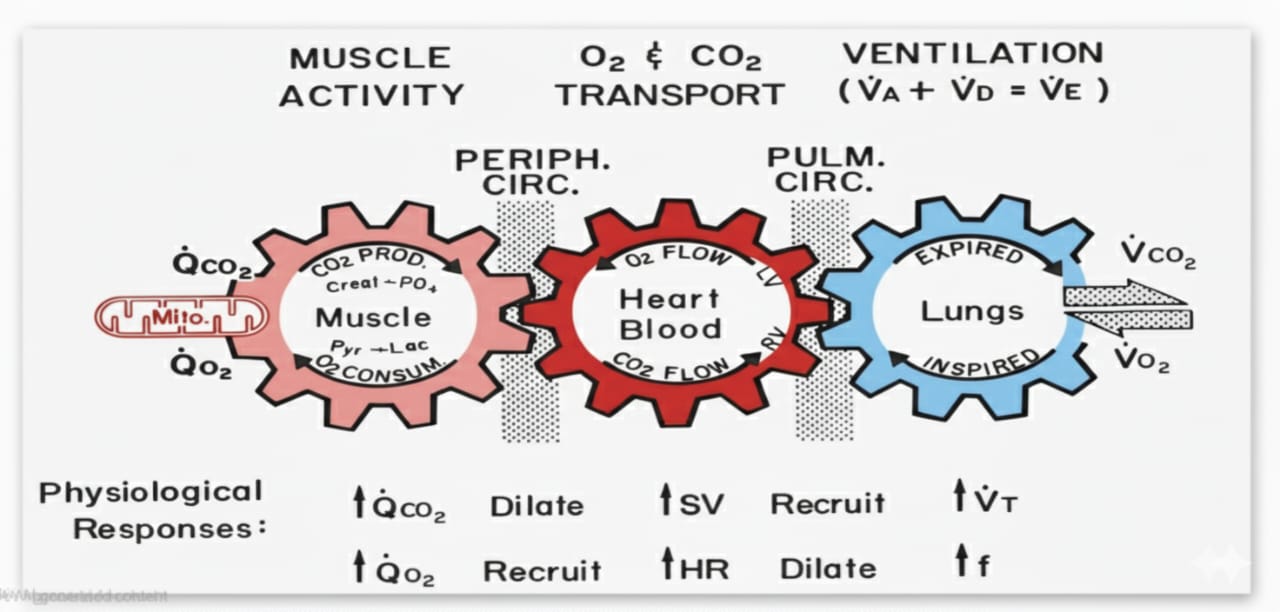
🫁❤️🚴♂️📈 How the Heart, Lungs, and Muscles Work Together During CPET
A clear explanation of how the muscles, heart, and lungs work together during exercise and what CPET reveals about their coordination.
Read →
🩺 Understanding the Fick Equation and Its Application in CPET
The Fick equation explains how oxygen delivery and utilisation work together during exercise. This article breaks down cardiac output, oxygen extraction, and clinical relevance in CPET.
Read →
Calorimetry and CPET — Measuring Energy Through Breath
Every breath we take during exercise carries a clue about how efficiently our body converts fuel into energy. Calorimetry is the science that helps us measure this energy expenditure — and when combined with Cardiopulmonary Exercise Testing (CPET), it becomes one of the most insightful tools in functional physiology.
Read →
🫁❤️🚴♂️📈 Basic Exercise Physiology — What CPET Really Measures Inside the Body
When we perform a CPET, we are essentially watching the body shift from rest to progressively higher levels of metabolic demand. Nothing works in isolation — the heart, lungs, blood vessels, and muscles move together like a synchronized system. The graph I use for teaching shows these changes very clearly. This section breaks down each variable in a simple, practical way.
Read →